





Bus falls create unique liability questions. Unlike slip-and-fall accidents in stores or on sidewalks, buses involve moving vehicles, sudden forces beyond passengers’ control, and government entities with immunity protections. A Dallas slip and fall injury lawyer can explain when DART bears responsibility for passenger falls—and how to prove liability—in slip fall bus Texas cases, which affects whether victims recover compensation or absorb medical costs themselves.
Key Takeaways for DART Bus Fall Claims
- Texas treats bus operators as common carriers that owe passengers a high degree of care, creating more demanding standards than ordinary negligence standards.
- Sudden stops by bus drivers constitute negligence when unnecessary or excessive, though emergency braking to avoid collisions might not create liability.
- DART owes duties to maintain safe bus conditions, including functional handrails, slip-resistant floors, adequate lighting, and prompt cleanup of wet or hazardous surfaces, analyzed under tangible personal property standards.
- Standing passengers have the same rights as seated passengers under the high-care standard, though DART might argue comparative fault based on not holding handrails when available.
- Video footage from bus interior cameras provides critical evidence but often gets overwritten within 30-90 days, making immediate preservation requests essential.
Common Carrier Duty: Higher Standards for Passenger Safety
Texas treats bus operators as common carriers that owe passengers a high degree of care consistent with the practical operation of a transit system. That standard is more demanding than ordinary negligence standards, but carriers are not insurers of safety. In practice, a passenger proves negligence by showing DART failed to exercise this heightened care—through unsafe driving, inadequate supervision, or unsafe conditions on the bus or at DART facilities.
This elevated duty creates lower thresholds for proving negligence in bus accident cases. What you need to know is that victims don’t need to show egregious conduct or reckless disregard. Demonstrating that DART failed to exercise the high degree of care required—through driver error, inadequate maintenance, or unsafe conditions—establishes liability. Carriers owe a high degree of care but are not insurers of safety.
Sudden Stop Falls: When Driver Actions Cause Injuries
Bus drivers control massive vehicles carrying standing passengers without seatbelts. Operating these vehicles safely requires smooth acceleration, gradual braking, and anticipation of traffic conditions. When drivers brake suddenly without necessity, throwing passengers into seats, poles, or other passengers, driver negligence causes any resulting injuries.
Negligent vs. Emergency Braking
Not every sudden stop constitutes negligence. Drivers who slam the brakes to avoid hitting pedestrians who dart into traffic, vehicles that cut them off suddenly, or children chasing balls into streets act reasonably despite abrupt stops. The sudden emergency doctrine protects drivers who brake hard in response to genuine emergencies requiring immediate action.
Liability depends on whether the sudden stop was necessary given traffic conditions. A driver who approaches a yellow light at full speed and then brakes hard when it turns red acts negligently—anticipating the signal change and slowing gradually would have prevented the harsh stop. A driver who brakes hard when a car unexpectedly swerves into the bus lane responds appropriately to emergency conditions.
Evidence proving unnecessary sudden stops includes:
- Witness testimony about traffic conditions before the stop showing there was no genuine emergency
- Video footage revealing road conditions and whether hazards actually existed
- Bus GPS and speed data demonstrating approach speed and braking patterns
- Driver statements about why they braked that contradict observable conditions
- Prior complaints about the same driver’s aggressive operation or failure to anticipate traffic
Distracted Driving and Sudden Stops
Bus drivers who focus on schedules, radios, or personal devices rather than traffic ahead often brake late and hard. You need a lawyer after this kind of distracted operation causes passenger falls. Drivers checking route schedules, talking on radios, or adjusting mirrors while operating take attention away from traffic monitoring.
DART’s driver training, supervision, and discipline records become relevant in these cases. Patterns of complaints about aggressive driving, prior incidents involving the same driver, or inadequate training support claims that DART knew or should have known the driver operated unsafely.
Condition or Use of Bus Equipment (Tangible Personal Property)
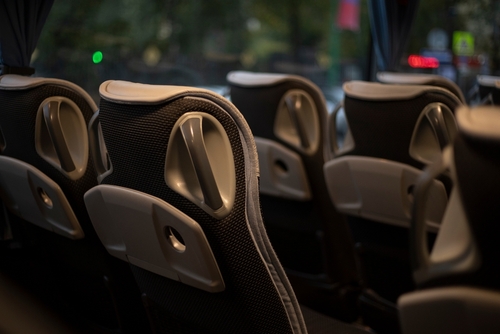
Hazards inside the bus—such as wet, slippery flooring; defective or missing handrails; inadequate interior lighting; or damaged steps or flooring—are analyzed under the Tort Claims Act’s waiver for the condition or use of tangible personal property and, where appropriate, negligent operation or use of the motor vehicle. Liability typically turns on DART’s knowledge and maintenance practices, inspection logs, and whether the equipment’s condition contributed to the fall.
Wet and Slippery Floors
Rainy days bring wet passengers who track water throughout buses. Spilled drinks create slick spots. Cleaning solutions leave slippery residue. DART owes duties to address these conditions through providing mats at entrances during wet weather, cleaning spills promptly after notice, using appropriate cleaning products, warning passengers about wet conditions, and maintaining slip-resistant floor surfaces.
The notice requirement means DART faces liability when they knew about wet conditions or when conditions existed long enough that reasonable inspection would have discovered them. A spill that occurred seconds before a passenger slipped might not create liability. A wet floor that remained unaddressed for an entire rainy route establishes constructive notice.
Broken or Missing Handrails
Handrails provide critical support for standing passengers during acceleration, braking, and turns. Personal injury settlements are calculated based on how defective or missing equipment like broken handrails contributes to falls and the resulting injuries. When handrails are broken, loose, or missing entirely, passengers lack the means to brace against sudden movements. Falls resulting from absent or defective handrails establish liability when DART failed to maintain proper equipment.
Evidence of broken handrail liability includes photographs showing broken or missing rails, maintenance records revealing prior complaints about the same bus, inspection reports documenting deferred repairs, other passenger complaints about handrail conditions, and video footage showing the handrail condition at the time of the fall.
Poor Lighting and Visibility
Inadequate interior lighting creates trip and fall hazards, particularly for elderly passengers with vision limitations. Burned-out bulbs, malfunctioning fixtures, or insufficient lighting near stairs and aisles make navigating difficult. DART must maintain proper lighting throughout buses, especially near stairs where boarding and alighting passengers face elevated fall risks.
Damaged Steps and Floor Surfaces
Worn floor mats with curled edges create trip hazards. Damaged steps with broken edges or missing non-slip surfaces increase fall risks during boarding and alighting. Torn flooring materials catch feet and cause trips. These maintenance failures establish liability when DART knew about defects or when reasonable inspections would have revealed them.
Gap Falls: Boarding and Alighting Accidents
The space between bus doors and curbs creates fall hazards, particularly for elderly passengers, those using mobility aids, and anyone distracted while boarding. DART drivers must position buses close to curbs, minimizing gaps. Wheelchair lifts must function properly to provide safe transitions.
Gap fall liability depends on several factors. Bus positioning matters—drivers who stop three feet from curbs when closer positioning was possible create unnecessary hazards. Platform height mismatches at stations require driver attention to safe deployment of boarding aids. Poor lighting at stops makes gaps harder to see.
Who owns the location matters: many curbside stops and sidewalks are city right-of-way rather than DART property, which can change who you must notify and which caps apply. Incidents at stations or platforms may implicate DART premises liability under the real property waiver; curbside boarding may involve different defendants and defenses.
Standing Passenger Rights and Responsibilities
Crowded buses during rush hours require standing passengers. No law requires passengers to remain seated or prohibits standing in properly designated areas. Standing passengers benefit from the same high degree of care standard as seated passengers, though comparative fault arguments arise more frequently in standing passenger cases.
DART may argue that standing passengers who fall should have held handrails more securely or positioned themselves more carefully. Mistakes to avoid include accepting this argument without reviewing whether conditions like broken handrails or overcrowding limited your ability to stay balanced. However, the high degree of care standard means DART bears responsibility even when passengers contributed through slight inattention.
Counter-arguments to standing passenger fault claims include:
- Crowded conditions prevented access to handrails or secure positions
- Sudden stops were so forceful that holding handrails couldn’t prevent falls
- Broken or missing handrails left passengers without proper support
- The driver’s excessive speed or harsh braking exceeded what passengers could reasonably anticipate
- Elderly or disabled passengers lacked the physical capacity to brace against sudden forces
- Passengers carrying items, managing children, or using mobility aids had limited ability to secure themselves
Proving Your Bus Fall Case

Evidence collection begins immediately after falls. Bus video footage provides the most powerful proof but gets overwritten within 30-90 days on most systems. Send preservation and spoliation letters immediately to ensure footage retention. Early attorney involvement ensures preservation requests reach DART before footage disappears.
Critical evidence includes video footage showing the fall, bus conditions, passenger behavior, handrail availability, and traffic conditions. Incident reports establish that the fall occurred, even if they minimize DART’s fault. Witness testimony from other passengers provides descriptions of bus conditions and driver behavior. Medical documentation links injuries to the fall. Maintenance records reveal inspection logs, prior complaints, deferred maintenance, and a history of similar incidents. Physical evidence includes photographs of conditions, gap measurements, lighting documentation, and floor surface images.
Texas Tort Claims Act and DART Immunity
DART’s status as a governmental entity triggers Texas Tort Claims Act provisions. The Act waives sovereign immunity for motor vehicle operation negligence and condition or use of tangible personal property, allowing claims against DART. However, it imposes strict requirements and limitations.
The six-month notice requirement applies to all DART claims. Written notice must reach DART within six months of the fall. Missing this deadline bars claims permanently regardless of injury severity or liability clarity.
Damage caps limit recovery to $100,000 per person and $300,000 per occurrence for local government units. These caps apply to all damages—medical expenses, lost wages, pain and suffering—combined. Punitive damages aren’t available against governmental entities, and interest and costs are governed by statute. Victims with catastrophic injuries might face significant uncompensated losses beyond statutory caps.
Early Steps to Protect Your Claim
Once you’re home and safe, notify DART about the incident as soon as you’re able. Give the route number, approximate time and location, and any details you remember about bus conditions (e.g., wet flooring, loose or missing handrails, lighting). Ask for an incident or complaint number and request, in writing, that DART preserve on-board video, driver reports, and vehicle data for the date and time of your fall.
Arrange a prompt medical evaluation even if the injury seems minor. Keep copies of all visit summaries, imaging, prescriptions, and bills. Document your symptoms and limitations in a short daily journal, and take dated photos of visible injuries over several days to show progression. When cases go to court, this documentation strengthens credibility and proves the injury’s impact. Preserve physical evidence—shoes, clothing, mobility aids—without cleaning or repair, and save receipts for out-of-pocket costs related to the injury.
If you already have contact information for any fellow passengers or witnesses, store it safely in one place. If you don’t, write down anything that could help identify them later (route, stop, time, bus number if known, where you were standing or sitting). Your attorney can use this information—along with preserved video—to locate witnesses.
Consult an attorney experienced with DART claims promptly. The six-month Tort Claims Act notice deadline and short video retention windows make early legal action important. An attorney can send preservation and notice letters, request relevant records, and guide you on next steps while you focus on recovery.
FAQ for DART Bus Fall Claims
Does It Matter If I Was Standing vs. Sitting When I Fell?
Standing passengers benefit from the same high degree of care standard as seated passengers, though DART might argue you should have held handrails or positioned yourself more safely. Your comparative fault depends on whether handrails were available and functional, how crowded the bus was, and whether the sudden movement exceeded what passengers could reasonably anticipate.
What If the Bus Driver Says the Sudden Stop Was Necessary?
Drivers might claim sudden stops resulted from traffic conditions that required emergency braking. Your attorney investigates whether the emergency actually existed through witness testimony, video footage, and traffic condition analysis. Even genuine emergencies don’t automatically eliminate liability if the driver’s prior inattention or excessive speed created the emergency situation.
Can I Sue If I Slipped on a Wet Floor Without Warning Signs?
Yes, DART owes duties to maintain safe conditions, including cleaning wet floors, providing mats during rainy weather, and warning passengers about hazards. The lack of warning signs supports your claim. DART must prove they didn’t know about the wet condition and that it hadn’t existed long enough for reasonable inspection to discover it.
What If the Handrail I Was Holding Broke, Causing My Fall?
Broken handrails establish maintenance negligence. DART must inspect handrails regularly and repair defects promptly. Prior complaints about the same handrail, inspection records showing missed defects, or deferred maintenance documentation strengthen your claim.
How Long Do I Have to File a Claim Against DART?
You must provide written notice to DART within six months of the fall under Texas Tort Claims Act requirements. This notice preserves your right to file a lawsuit later within the two-year statute of limitations. Missing the six-month notice deadline bars your claim permanently.
Get Legal Help for Your Bus Fall Injury
Bus falls can cause serious injuries, including fractures, head trauma, spinal injuries, and soft tissue damage requiring extended treatment. DART’s common carrier duty creates higher liability standards than ordinary slip-and-fall cases, yet their government status introduces notice requirements and damage caps that complicate claims.
AMS Law Group represents DART bus fall victims throughout Richardson and Dallas County. We understand common carrier duty standards, tangible personal property liability on public transit, and Texas Tort Claims Act procedures.
Call our Richardson office at (888) 960-8363 today for your free consultation. We’ll review your bus fall circumstances, explain liability under common carrier standards, and ensure required notices are filed before the six-month deadline expires. Don’t let DART minimize your injuries or deny responsibility for preventable falls caused by driver negligence or poor maintenance.